
Nanoparticles are tiny. Very tiny, in fact. It is only until
quite recently that we have been able to even see them with the invention of
the scanning electron microscope. It turns out that nanoparticles are around
the size of a molecule of glucose, around twenty-four atoms big. The properties
of elements at the ‘nanometric’ level are much different than those at their
common sized state, in fact their properties are sometimes even opposite. For
example, an element that is normally solid and relatively inert could be liquid
and very flammable when nano-sized.
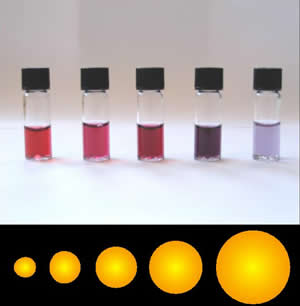
The properties of elements and compounds at the nanoscale
level have undergone much experimentation and they have many useful
applications that can affect us in our everyday lives. We can see how the
effects diesel exhaust affects our lungs at a nanoscale level. Nanoparticles
can be used to detect clots in arteries to the point of the exact location for an
immediate response. They have even used nanoparticles as a cheaper and
efficient means of detecting HIV and cancerous cells. The knowledge of these
properties is still new and much more research has to be done to know what is
safe to put into our bodies and how nanoparticles react. Hopefully
nanotechnology will revolutionize medical treatments and diagnostics for our
betterment!

sources:
"DNA Folding, in Detail." Paul Rothemund:. Web. 22 May 2015.
"Findings on Pollution Damage." Web. 22 May 2015.
"New Nanoparticles Make Blood Clots Visible." Web. 22 May 2015.
"Programmable Bio-Nano-Chip as Medical Diagnostic Tool." Web. 22 May 2015.
"World's First Programmable Nanoprocessor." Web. 22 May 2015.

No comments:
Post a Comment